DEMO PROJECTS
From marine samples to medicines: EUREMAP’s bioprospecting workflow in action.
The EUREMAP Pipeline in action
EUREMAP’s demonstrator projects put the consortium’s combined expertise to work on real marine bioprospecting challenges. Eleven partners spanning Norway, Spain, Belgium, Israel, Italy, Germany, Portugal, France, and the EU-OPENSCREEN, EMBL, EMBRC, and ELIXIR research infrastructures, contribute complementary capabilities to each project: microbial strain collections and cultivation know-how, compound extraction and purification methods, LC-MS and NMR analytical pipelines, and bioinformatic tools for biosynthetic gene cluster prediction and metagenomic analysis.
This is paired with a wide range of bioactivity and toxicity assays, including antifouling bioassays, transcriptomic screening for unknown mechanisms of action, and kinase-inhibition and cell-viability assays. By integrating these capabilities into a single workflow, each demonstrator project traces a path from raw marine samples to characterized, potentially bioactive compounds, testing and refining the EUREMAP pipeline as it goes.
DEMO PROJECT #1
Enhancing the production and therapeutic potential of streptocyclinones for alzheimer’s disease
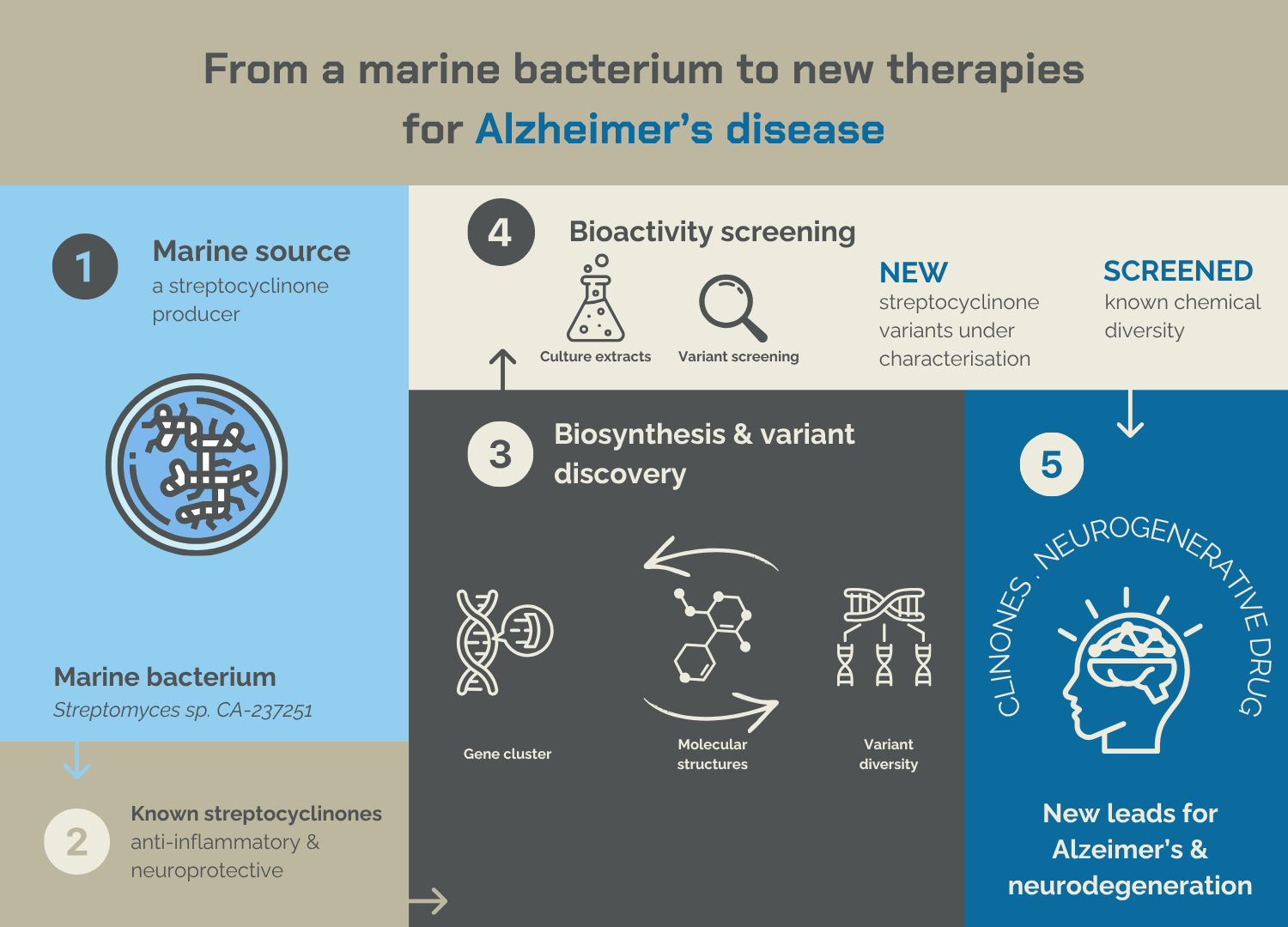
Can the ocean hold the key to new therapies for Alzheimer’s disease? This EUREMAP demonstrator project is exploring exactly that. The project focuses on identifying and characterising additional streptocyclinones, a family of natural products already known for their anti-inflammatory and neuroprotective properties, produced by the marine bacterium Streptomyces sp. CA-237351.
By deepening understanding of their biosynthesis and expanding the known diversity of streptocyclinone variants, the work aims to unlock new therapeutic potential for neurodegenerative disease.
DEMO PROJECT #2
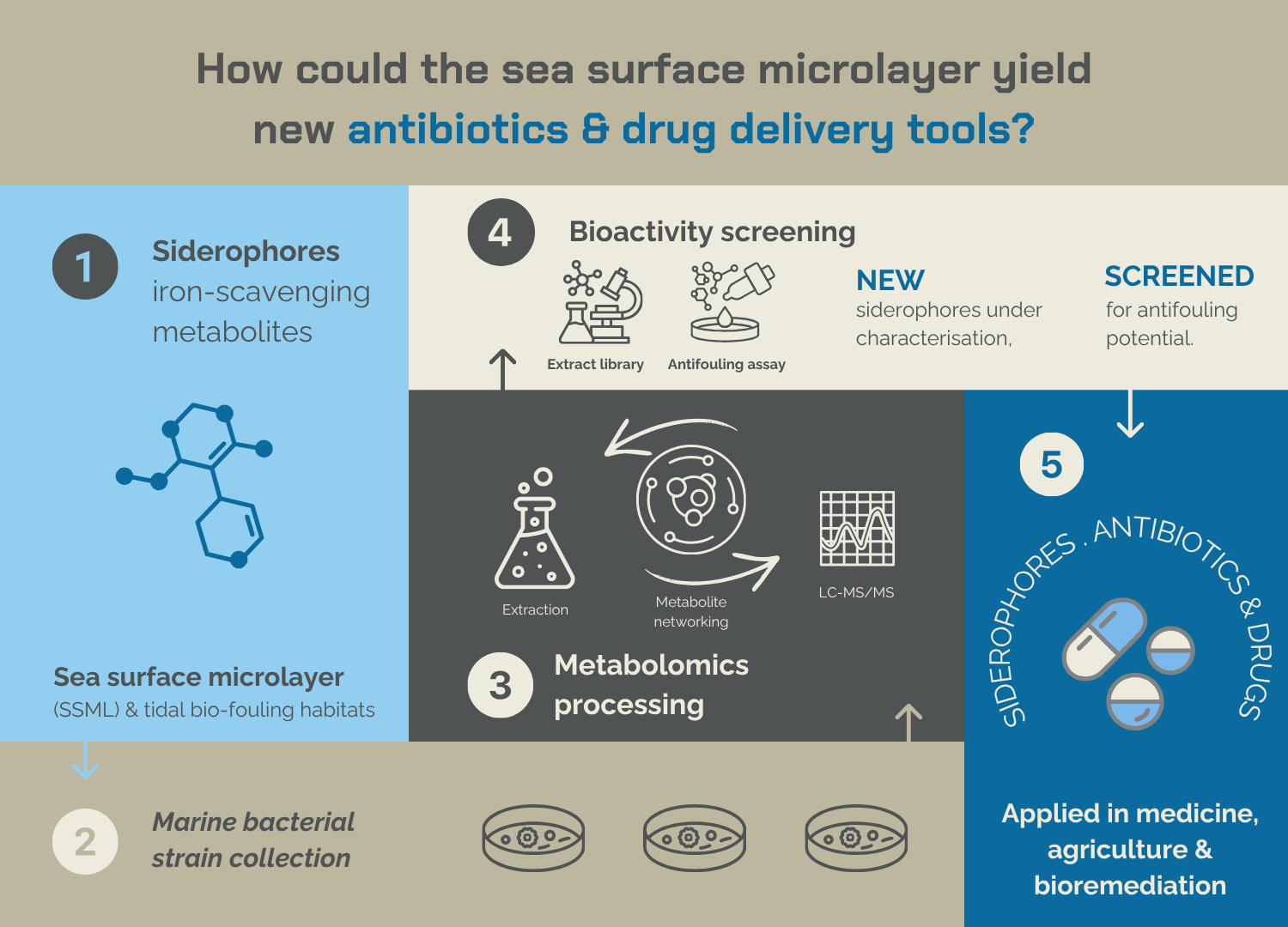
Exploring an under-explored marine niche for novel siderophores, metabolites with promising applications in medicine, agriculture, and bioremediation. While the open ocean has already yielded known siderophores, the sea surface microlayer (SSML) and tidal bio-fouling habitats remain largely unstudied. Microbial communities in these niches are exposed to intense UV radiation, fierce nutrient competition, and constant environmental fluctuation, conditions that may drive them to produce distinctive secondary metabolites, making this a promising new frontier for siderophore bioprospecting.
Working from existing marine bacterial strain collections, the demonstrator project team is generating extracts and applying comprehensive metabolomics analysis, including an LC-MS/MS-based post-column metal infusion method to characterise these metabolomes, identify novel siderophores, and screen for antifouling potential.